
Press Releases
JC Auditors delivers another first in Africa


SANAS-accredited certification body JC Auditors’ (JCA) commitment to enhancing audit processes has paid off, becoming the first company in Africa to offer a range of audits under one umbrella. The company’s integrated, cost-effective audit approach that allows for the evaluation of multiple standards in a single audit promotes safety, compliance, and efficiency in various sectors in South Africa.
Renowned for its pioneering efforts, JCA is the only organisation in Africa to offer accredited certifications for Road Transport Management System (RTMS), ISO 9001, ISO 14001, ISO 45001, ISO 22000, ISO 3834 and ISO 13485.
“Continuous improvement in audit quality is a priority at JCA that has steadily expanded its service offering, recognising the need to benchmark South African businesses against global norms,” says Managing Director Oliver Naidoo. “For our economy to be globally competitive, we need our supply chains to operate at a world-class level. These standards raise the bar and keep the flag flying – despite the significant challenges faced by the industry including protest action, criminality, and overall poor safety culture.”
The company most recently achieved SANAS accreditation for ISO 3834 Fusion Welding and ISO 13485 Quality requirements for medical devices. Increased accreditations for standards has allowed the company to steadily diversify into various sectors, including the health industry, liquor industry, engineering, mining, construction, waste management and information technology, with some big names now listed as clients.
The company, however, remains conscious of the difficult trading conditions in South Africa and is committed to introducing cost-effective solutions. “Our one-stop solution is proof of this,” says Naidoo. “It is a strategic approach to ensure we can offer the South African market all the standards needed under a single umbrella.”
According to Naidoo, the team at JCA has made remarkable progress in awarding certification to a host of transport operators that have successfully implemented international standards in their business, particularly the world’s three most popular standards ISO 9001, ISO 14001 and ISO 45001. These include leading industry players such as Unitrans, Reinhardt Transport, Crusade Logistics and Premier Logistics.
There is increasing momentum for other international standards such as ISO 22000 Food Safety, recently awarded to Tanker Services Food and Chemicals, as well as Onelogix United Bulk and Imperial Fast n Fresh. Onelogix United Bulk has also become the first dangerous goods transporter in South Africa to be awarded ISO 39001 Road Traffic Safety certification by JCA.
JCA recently received the outstanding achievement award jointly with the RTMS NPC at the inaugural African Supply Chain Excellence Awards (ASCEA).
“We are proud of our African excellence model with global acceptance which provides our clients with peace of mind that all our accredited certifications are recognised globally in terms of the International Accreditation Forum’s (IAF) multi-lateral agreement,” concludes Naidoo.


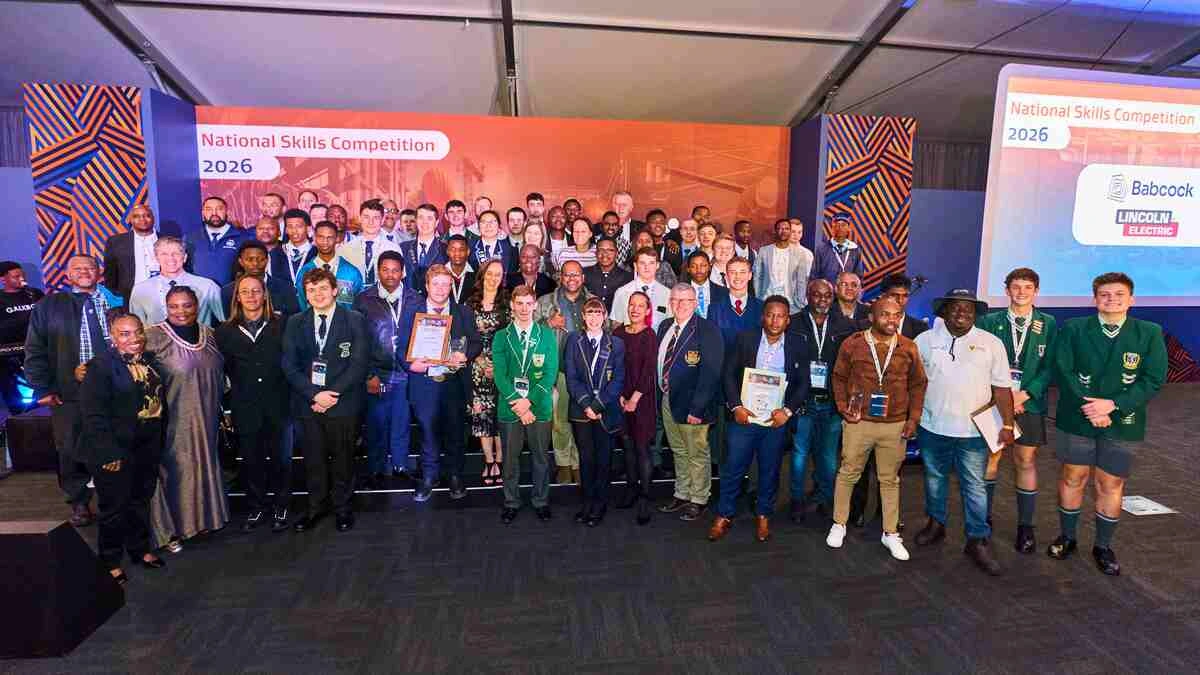
South Africa’s future is being built by skilled young hands, and technical excellence deserves the same celebration as academic success.
This was the message at the 2026 National Skills Final Competition Awards Ceremony in Johannesburg yesterday, where the country’s emerging technical talent took centre stage.
The Sasol Foundation, in partnership with Kagiso Trust, the Department of Basic Education, government and industry stakeholders, celebrated the achievements of the finalists at an evening attended by Minister of Basic Education Siviwe Gwarube, senior government and education representatives, industry leaders, educators and partners.
The national final brought together 151 learners and 77 teachers from all nine provinces who reached the 2026 national final, celebrating their achievements after more than 17,000 learners participated in qualifying rounds across the country.
Over the previous two days, Grade 10 and 11 learners and teachers competed in 11 practical, industry-relevant disciplines, putting their technical knowledge, precision, creativity, problem-solving ability and practical application of skills to the test.
“There should be no hierarchy of dignity between these pathways. A country needs doctors and engineers. But it also needs artisans, technicians, electricians, welders, fitters, machinists, mechanics, plumbers, builders and skilled operators. These skills are not second-tier careers. They are essential careers,” said Minister of Basic Education Siviwe Gwarube.
Category winners were awarded cash vouchers, tools of the trade and online courses and one lucky winner, Simthandile Mkwanazi in the Construction category was awarded a R250 000 apprenticeship from Resolution Circle.
Building a Skills Pipeline From School
For South Africa, the importance of developing these skills extends well beyond a two-day competition.
As the world of work changes through technological innovation, digitalisation, industrialisation and the transition to a greener economy, so too does the range of skills young people need to participate meaningfully in it. The challenge is not simply to create opportunities, but to ensure that young people are equipped to take advantage of them.
Building that capability needs to start early.
The National Skills Competition provides a practical example of what this can look like: identifying technical talent at school level, giving young people opportunities to test themselves against real-world challenges, exposing them to industry and creating greater visibility around technical and vocational pathways.
South Africa needs to continue rebuilding its technical skills pipeline – not as a short-term programme, but as a sustained pathway that starts at school and connects education with further learning, apprenticeships, entrepreneurship and employment.
“The competition provides young people with an opportunity to demonstrate what happens when knowledge meets practice,” said Minister Gwarube. “A textbook can explain a principle. A classroom can teach a process. But a skilled person must ultimately be able to apply that knowledge accurately, safely and efficiently.”
The competition is designed to demonstrate that technical and vocational education is not a fallback option, but a pathway into meaningful and rewarding careers. The 11 categories – spanning automotive technology, CAD, construction, digital systems, electrical power systems, engineering graphics and design, electronics, fitting and machining, plumbing, woodworking, and welding and metalwork – reflect the breadth of technical capability required in a changing economy.
For the young competitors, the national final was an opportunity not only to compete, but to build confidence, experience and a clearer understanding of where their skills can take them.
Dr Mankodi Moitse, Chief Executive Officer of Kagiso Trust, said the competition demonstrated the value of creating opportunities for young people to discover their strengths and apply what they have learned.
“Technical and vocational pathways are not alternatives to success. They are important pathways into it,” she said.
“Technical excellence requires discipline, curiosity, the willingness to learn, to make mistakes, to try again and to keep improving. These are qualities that will serve young people well, wherever their careers take them.”

Dr Mankodi Moitse CEO of Kagiso Trust
She also highlighted the role of educators in creating these opportunities.
“Skills are transferred through people. The knowledge, patience and commitment of teachers, trainers and mentors help create opportunities for others.”
Thabile Makgala, Executive Vice President: People, SHE Risk and Corporate Affairs at Sasol added, “Tonight we celebrate more than technical ability. We celebrate the confidence that comes from mastering a skill, the courage to compete, and young South Africans showing that excellence is found in practical achievement as well as academic.
“The young people we have seen over the past two days could be tomorrow’s artisans, engineers and entrepreneurs. Our responsibility is to make sure the pathway is there for them when they leave school.”
Celebrating Achievement – And The People Behind It
The awards ceremony recognised the achievements of the teachers and learners who reached the national final, with winners announced across the competition’s categories.
The competition also recognised the contribution of educators, mentors, industry partners and sponsors who supported the finalists throughout the process.
“Behind every successful learner is an educator who invested time, energy and belief,” said Makgala. “Their contribution extends far beyond the classroom. They are helping to shape the next generation of skilled South Africans.”

Thabile Makgala Executive Vice President People Risk SHE and Corporate Affairs at Sasol and Sasol foundation Trustee
The 2026 competition was supported by a growing network of partners, including the Department of Basic Education, the Department of Higher Education and Training, Kagiso Trust, Resolution Circle, Matus, Modena, ATI, John Orr Engineering School of Specialisation and other industry and category sponsors.
The organisers also acknowledged the contribution of industry partners in providing venues, expertise, equipment, judging and opportunities for young people to engage with the world of work.
The National Skills Competition began in 2018 as a partnership between the Sasol Foundation and the Free State Department of Education. Kagiso Trust joined in 2022, introducing the teacher component, with the competition expanding to five provinces in 2023 and becoming fully national in 2024.
Today, the competition brings together learners, teachers, government, education institutions and industry around a shared objective: to raise the profile of technical skills and help build a stronger pipeline of young South Africans equipped for the future.
The initiative supports South Africa’s three-stream education model and the National Development Plan 2030 target of producing 30,000 artisans a year, while providing a platform through which young technical talent can progress towards further opportunities, including international skills competitions.
For the 2026 finalists, however, the achievement is more immediate.
They have demonstrated what is possible when talent meets opportunity – and shown that South Africa is not short of ambition, ability or potential.
The task now is to continue creating the pathways that allow that potential to become opportunity.
To view the full list of winners, click here.

Thought Leadership Piece
It is tempting to look at the measured pace of fully electric vehicle adoption on South African roads and conclude that the automotive aftermarket still has time to adapt. That perspective is short-sighted and carries significant economic and operational risks for the sector.
The growing presence of traditional and plug-in hybrid vehicles demonstrates that the technological transition is already well underway. Within the next few years, thousands of these increasingly sophisticated vehicles will move beyond their original manufacturer warranty periods and into independent aftermarket workshops.
“The question is not whether electromobility is coming to the aftermarket – it is already here. The industry needs to make sure that its businesses and people are ready to work safely and competently on these vehicles when they arrive outside the dealer network,” says Pieter Niemand, National Director of the Motor Industry Workshop Association (MIWA) representing 2 700 independent workshops nationally and a proud association of the Retail Motor Industry Organisation (RMI).

Pieter Niemand, National Director of the Motor Industry Workshop Association (MIWA)
South Africa’s automotive retail aftermarket is a fundamental pillar of the economy, supporting more than 270,000 jobs across approximately 23,000 employer businesses. The vast majority are small and medium-sized enterprises, spanning mechanical repair shops, vehicle dealerships, tyre centres, precision engineering businesses and remanufacturing operations.
If the aftermarket delays adapting its skills base, thousands of independent businesses face the prospect of losing customer trust, commercial relevance and ultimately sustainability as the national vehicle fleet evolves.
“For independent workshops, this is ultimately about remaining relevant and competitive. Customers will continue to need trusted businesses to maintain and repair their vehicles, but those businesses must have the skills to work on the technologies that are increasingly coming into the market,” Niemand says.
The shift towards electromobility also introduces new technical and safety considerations into everyday workshop environments. Technicians are increasingly encountering high-voltage electrical circuits, sophisticated battery packs and integrated software architectures.
High-voltage vehicle components can present serious electrical hazards if they are handled without the correct procedures, equipment and training. Modern technicians therefore need formal competence to identify risks, isolate electrical systems safely, navigate digital diagnostic platforms and complete complex repairs in line with internationally recognised safety standards.
“This is a significant change for the traditional workshop environment. Technicians cannot simply rely on the knowledge and experience that has served them well with conventional vehicles. They need to understand high-voltage systems, battery technology and electronic diagnostics, and they need to know how to work safely around them,” says Niemand.
The skills requirement extends beyond the workshop floor. Service advisors, parts salesmen and sales teams are an important link between technical staff and vehicle owners. Frontline employees need a sound understanding of hybrid and electric propulsion systems so they can guide motorists accurately, quote correctly for specialised repairs, order the appropriate parts and communicate important safety considerations.
To safeguard the workforce and raise industry standards, fragmented and informal learning needs to make way for nationally recognised qualifications. The RMI has partnered with merSETA and the Quality Council for Trades and Occupations (QCTO) to establish three formal occupational skills programmes for new energy vehicles.
The structured qualification system follows a stepped approach. The first has a strong safety focus, and is aimed at helping workshop assistants develop the correct support practices around electric and hybrid vehicles. The remaining programmes are aimed at qualified technicians, with a stronger focus on maintenance, diagnostics and repair processes. This approach mirrors that already in place in Europe, where high-voltage training is treated as an ongoing process rather than a single intervention, and which is tailored according to an individual’s role, prior qualification and the type of work they are expected to perform. This ensures that there is a standardised training programme in place, setting a benchmark for workshops throughout the country, whilst also complying with international best practice.
International partnerships are also helping to strengthen South Africa’s training pipeline. Collaborations with organisations such as the German Chamber of Crafts Erfurt and GIZ enable local training to be benchmarked against more mature electromobility markets.
These initiatives incorporate the proven dual-system training philosophy, combining theoretical instruction with practical workplace experience. This approach provides young people entering the trade with portable qualifications while giving experienced mechanics a structured opportunity to upskill throughout their careers.
“We have an opportunity to learn from markets that are further along in the electromobility journey while developing skills that are relevant to South Africa. The combination of formal learning and practical workplace experience is particularly important in a technical industry such as ours,” says Niemand.
Preparing the aftermarket for electromobility will require proactive commitment from every stakeholder. Independent workshop owners and entrepreneurial mechanics need to embrace the opportunities presented by new vehicle technologies if small businesses are to continue thriving alongside larger dealer networks.
“The independent aftermarket has always adapted to changes in vehicle technology. Electromobility is another major step in that evolution, but it requires us to start preparing now rather than waiting until the vehicles are already in our workshops,” Niemand says.
MIWA is encouraging workshop owners, automotive technicians, business managers and other industry stakeholders to visit the organisation at Automechanika Johannesburg in October. The event will provide an opportunity to explore emerging training pathways, examine the latest diagnostic technologies and understand how accredited skills initiatives can help businesses future-proof their operations.
“Automechanika provides an ideal platform for the industry to engage with these developments. We want workshop owners and their teams to understand what is available to them and, importantly, to see that there are practical pathways to building the skills they will need for the future,” concludes Niemand.


South Africa’s Technical Talent Takes Centre Stage at National Skills Competition

Transport Month Begins With South Africa’s Freight Network Under the Spotlight

Preparing SA’s Automotive Aftermarket for the Electromobility Era


-

 Management3 months ago
SEO, AEO, GEO and SEO for AI: What Is the Difference for the Supply Chain Industry?
-

 Transport4 months ago
LDV T60 Max vs GWM P500 vs Isuzu D-Max vs Toyota Hilux vs Ford Ranger: Which Double-Cab Bakkie Offers the Best Value?
-

 Logistics4 months ago
DHL Group to invest around € 160 million in 2026-2027 to strengthen logistics infrastructure and support clean energy transition in France
-

 Logistics4 months ago
DHL Expands Asia Pacific Data Center Logistics Capabilities to Support Growing Regional Demand
-

 Logistics3 months ago
Top 5 Warehousing and Logistics Companies in the Western Cape by Google Review Rating
-

 Logistics4 months ago
Top 10 Warehousing and Logistics Companies in Gauteng by Google Review Rating
-

 Freight Forwarding4 months ago
The Hidden Cost of Shipping from China to South Africa — What Every SA Importer Needs to Know in 2026
-

 Logistics3 months ago
Top 4 Lift Truck Companies in Gauteng